
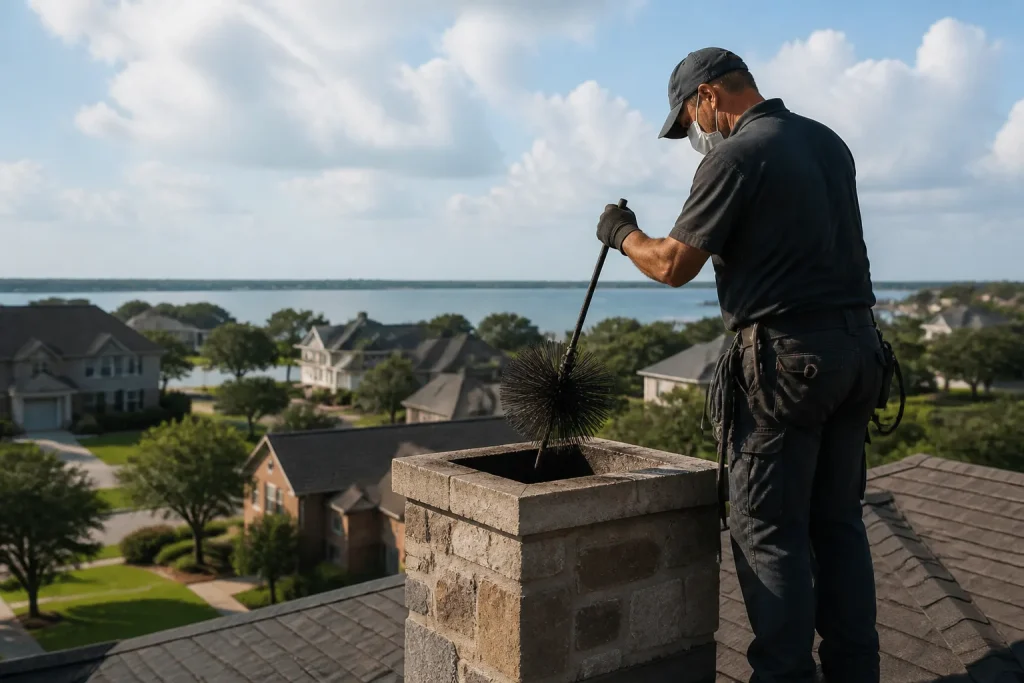
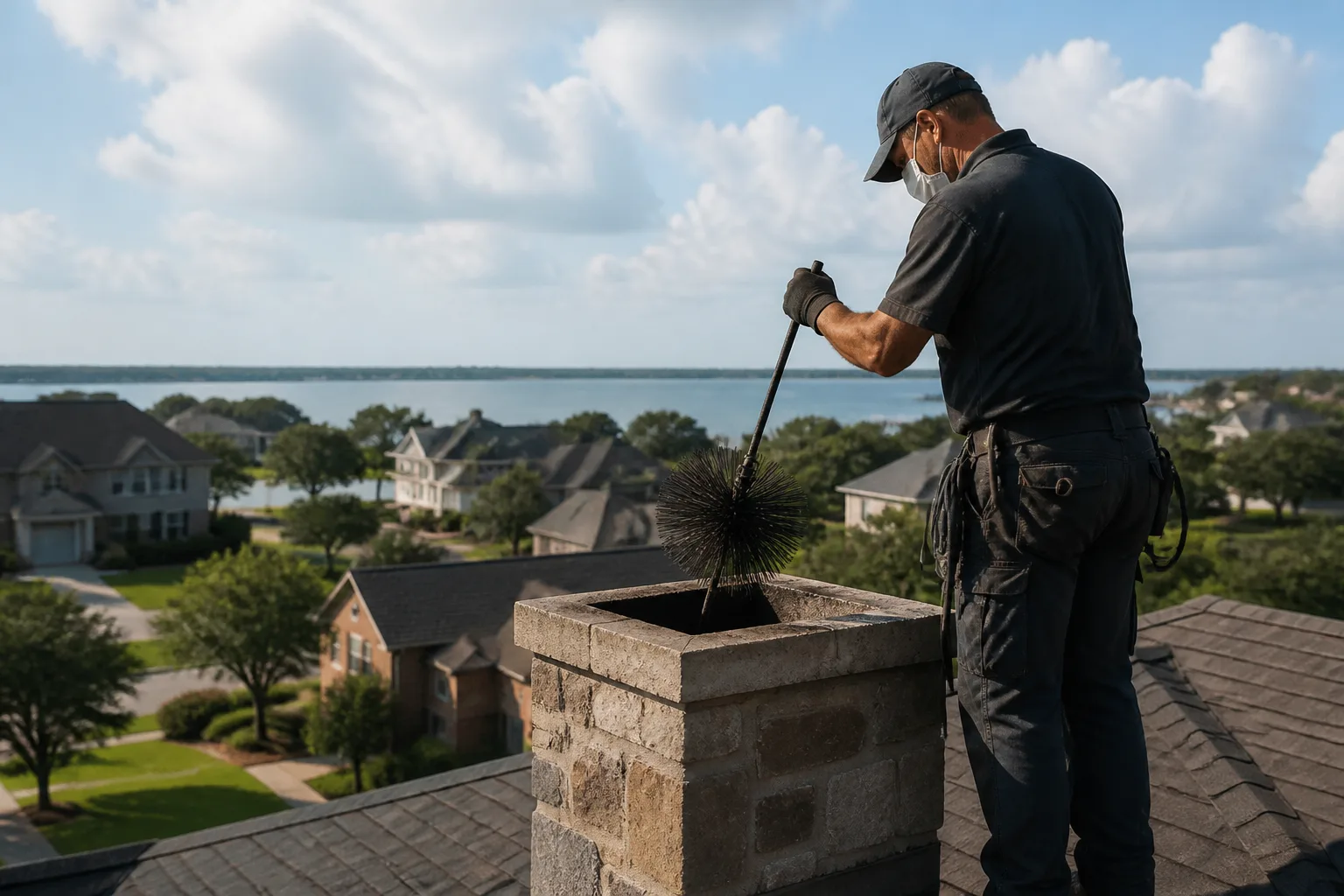
HeatShield Chimney Sweep in League City: A Homeowner’s Guide
Plenty of homeowners agree to a HeatShield application without realizing what they’ve just signed up for. It’s not a coating you’ll reapply in a few years, and it isn’t a cleaning product. It’s a permanent structural repair to a damaged flue liner. That distinction matters, because it changes how you should decide whether it’s the right fix for your chimney. HeatShield chimney repair in League City makes more sense once you understand what the material does, what it can’t do, and how to tell a real installation from a shortcut. This guide walks through all three.
What Is HeatShield, Exactly?
HeatShield is a ceramic resurfacing compound used to rebuild deteriorated clay flue liner interiors. Technicians apply it as a paste, then shape it against the flue walls with a specialized spinning tool that forms a smooth, continuous new surface inside the existing liner. It’s tested to ASTM standards for this specific use, which is why it shows up as a recognized repair method rather than a homemade fix. The result is a restored flue that carries smoke and gases the way the original liner was meant to.
The reason people confuse it with cleaning is that it happens after a sweep. You can’t apply HeatShield to a dirty flue any more than you can paint over peeling wallpaper and expect it to hold. The flue has to be swept first, then inspected, then judged fit for resurfacing. That sequence is why we treat a HeatShield job as repair work that starts with a sweep. If you’re already booking the sweep, that’s the natural time to ask whether your liner would benefit from the extra step. To understand what that first visit involves, read our overview of chimney sweep service and what the inspection covers.
What HeatShield is not: it’s not a full liner replacement, and it’s not a patch for every problem. We’ll get into the specific damage profiles where it’s the right call in a moment. The key point is that it works by restoring a liner that’s still structurally present but compromised on the inside surface.
HeatShield vs. Full Liner Replacement: How They Compare
These are two different tools for two different jobs, and understanding the split helps you evaluate what any contractor recommends. A full liner replacement means installing a new flue liner, often stainless steel, inside the chimney. HeatShield resurfacing rebuilds the existing clay liner from the inside. When a clay liner is intact but its inner surface has cracked or pitted, resurfacing restores it without tearing out the masonry. When the liner is collapsing or badly broken, replacement is usually the honest answer.
- Application: HeatShield is applied as a sprayed or troweled ceramic compound and shaped to the flue walls; replacement means inserting a new liner material.
- Scope of disruption: Resurfacing works within the existing flue. Replacement can require more invasive access depending on the chimney.
- Longevity: Both are considered long-term repairs, not recurring maintenance. Neither is a “redo it every few years” product.
- Best fit: HeatShield suits a sound liner with surface-level damage. Replacement suits a liner that’s failed structurally.
Cost depends on flue size, height, and how much prep the job needs, so the only number that means anything is the one on a written estimate. In our experience, homeowners who understand this comparison ask better questions and get fewer surprise recommendations. If replacement parts or a new cap are needed alongside the repair, working with established supply lines like Olympia Chimney and Copperfield means the right components are on hand rather than guess-ordered. That’s the practical reason we favor professional-grade brands: the job doesn’t stall waiting for a part.
Which Flue Problems Does HeatShield Actually Fix?
HeatShield is the correct repair for surface-level liner damage where the clay tile is still in place. That generally means hairline cracks, pitting, and minor spalling on the inner face of the flue. These are the problems that let creosote and moisture work their way into the liner and, left alone, open the door to bigger issues. Resurfacing seals those surfaces and restores a smooth interior that gases can move through cleanly.
It’s not appropriate when the damage runs deeper. If tiles are displaced, the liner is missing sections, or the flue has structural failure behind the liner, resurfacing is a cosmetic answer to a structural problem. In our experience, that’s where homeowners get talked into the wrong fix. The honest version of “inspect, identify, fix” means the inspection has to come first and the recommendation has to match what it finds. We won’t apply HeatShield to a liner that needs replacement, and no one should.
This is also the point where the type of damage matters as much as the amount. A hairline crack in a flue serving a wood-burning fireplace is a different situation from one in a flue that’s seen years of heavy use. The camera inspection is what tells the two apart. A photo report you can look at yourself is your best defense against a sales pitch dressed up as a diagnosis, so insist on seeing the flue before authorizing work. For more detail on the wider range of fixes a chimney can need, our chimney repair page covers the structural side.
Why HeatShield Comes Up More Often in League City
League City’s humidity is the reason flue tile degradation shows up here more often than in drier parts of Texas. Clay liners absorb moisture from humid air and from the condensation that forms when a chimney isn’t in steady use. When that moisture cycles in and out with the seasons, the tile surfaces slowly pit and crack. It’s a slow process, but it’s steady, and it means a League City chimney can look fine from the outside while the inside of the flue is quietly deteriorating.
That makes resurfacing a more common recommendation in League City than it would be in a climate that stays dry. The good news is that the same humidity that causes the damage also makes the repair worth catching early. A liner that’s caught at the pitting stage is a HeatShield candidate. One that’s left until the tiles spall and loosen may need replacement instead. The difference between those two outcomes is usually just whether anyone looked inside.
Our climate also keeps chimneys idle for long stretches between burns, which is exactly when moisture has the run of the flue. If your chimney sits unused for months at a time, an inspection before the burning season starts is the right habit. It’s a mild-winter town, so the risk isn’t freezing, it’s the slow accumulation of moisture and creosote in a flue nobody’s checked. For a broader look at maintaining a League City home’s venting, our League City Chimney Cleaning page lays out the full scope.
Safety note: A compromised flue liner can let heat and combustion gases reach areas they shouldn’t. Carbon monoxide is odorless, and a cracked liner is one of the ways it gets into a home. That’s why we treat a damaged liner as a safety item, not a cosmetic one, and why the repair should be done by a trained technician. Don’t open up and work inside a flue yourself.
What a Legitimate HeatShield Installation Looks Like
A real installation follows a clear sequence, and knowing it is the best way to spot a shortcut. Here’s how it should go:
- Sweep the flue first. The liner has to be clean before anything is applied. Creosote and soot prevent the compound from bonding.
- Inspect with a camera and document the damage. You should get photos of the flue before work begins.
- Confirm the liner is a candidate. The technician verifies the damage is surface-level and the liner is sound enough to resurface.
- Apply and shape the compound. The ceramic material is worked into the flue and formed into a smooth, continuous liner surface with the proper tooling.
- Let it cure and verify the result. After curing, the flue should be checked again, and you should see the finished result.
A shortcut job skips the sweep, skips the documentation, or applies the material thin and uneven to save time. That’s how you end up paying for a repair that doesn’t hold. We use HeatShield because the job actually requires a tested, professional-grade compound, and because a half-done application is worse than no application at all.
While the technician is at the house, have them look at your dryer vent too. Dryer vent fires are a leading household risk, and most chimney-only companies never check them. That’s a large part of why we handle dryer vent cleaning alongside chimney work, so one visit covers both. One call covers chimney and dryer vent, and that beats chasing down two contractors for two connected venting problems.
When to Call a Pro
If your liner has never been inspected, if you’ve noticed smoke backing up into the room, or if a previous contractor recommended HeatShield without showing you photos of the flue, it’s time to call. Those are exactly the situations where an honest inspection matters most. You don’t need an emergency, you need a proper look before the burning season starts. If you’d rather not climb up and peer down a flue yourself, that’s a good instinct. Call (866) 819-7336 and we’ll book a sweep and inspection. We answer 24/7, with fast dispatch from 7am to 7pm, Sunday through Friday.
The Bottom Line
HeatShield is a permanent ceramic resurfacing repair for a damaged clay flue liner, not a cleaning product and not something you reapply every few years. It’s the right fix for hairline cracks, pitting, and minor spalling, and the wrong fix for a structurally failed liner. League City’s humidity makes flue tile degradation more common here, which makes catching it early more valuable. Ask for camera documentation, confirm the product, and make sure the recommendation matches what the photos show. If you’re in League City and need help, League City Chimney Cleaning offers free estimates. Call (866) 819-7336. We answer 24/7, with fast dispatch from 7am to 7pm, Sunday through Friday. We work with professional-grade brands including Gelco and Famco, and our technicians have up to 15 years of experience.
Frequently Asked Questions
It’s a repair. HeatShield is a ceramic resurfacing compound applied to the inside of a damaged flue liner to rebuild its surface. It happens after a sweep, but it’s permanent structural work, not maintenance you repeat every few years. If your flue only needs cleaning, a sweep is all you need. Call (866) 819-7336 for an exact quote. Estimates are free.
A camera inspection tells you. Hairline cracks, pitting, and minor spalling on a sound liner point to HeatShield. Displaced or missing tiles and structural failure point to replacement. The right answer depends on what the photos show, not on a guess. Call (866) 819-7336 and we’ll inspect and document the flue before recommending anything.
No. It requires a clean flue, specialized tooling, and the trained judgment to tell whether the liner is even a candidate. A poorly applied compound can fail and leave you worse off than before. This is work for a trained technician working inside a confined, potentially hazardous space. Call (866) 819-7336 to book an inspection. Estimates are free.
An annual inspection is the usual guidance, especially before the burning season. League City’s humidity speeds up flue tile wear, so an annual look catches pitting and hairline cracks while they’re still HeatShield candidates rather than replacement jobs. Call (866) 819-7336 to schedule yours. Estimates are free.
Written by the team at League City Chimney Cleaning.
Need Chimney Cleaning Help?
Call League City Chimney Cleaning - licensed & insured, here with fast help in League City.
(866) 819-7336